domingo, 29 de junio de 2025

Social Media as Your New Language Classroom

Social Media as Your New Language Classroom: Learn with YouTube, TikTok, and More


What if your next language lesson was just one scroll away? Social media—beyond memes and viral dances—has become a virtual classroom where millions of people learn languages without textbooks or chalkboards.
Why Learn Languages Through Social Platforms?
- Bite-sized, engaging content: short videos are dynamic and easy to remember.
- Access to native speakers: hear real expressions and the natural flow of speech.
- Tailored to your taste: algorithms serve up what you love—recipes in French, jokes in English, and more.
- No-pressure learning: you choose when, where, and how you learn.
Platforms That Teach Without Feeling Like a Class
- YouTube: channels like Easy Languages, Speak English With Vanessa, and Français Authentique offer content for all levels.
- TikTok: creators like @thelanguageblonde (English/Spanish) and @linguamarina (English) share quick tips, common mistakes, and useful phrases.
- Instagram Reels: educational accounts mix culture, pronunciation, and daily motivation.
Tips to Make the Most of It
- Create a separate account focused on content in your target language.
- Save your favorite videos and rewatch them regularly.
- Imitation = magic: repeat out loud and even record your own version.
- Engage actively: comment, ask questions, join language challenges.

Today, learning a language can be as fun as watching your favorite series. Social platforms offer variety, accessibility, and fresh content that adapts to you. So next time you open TikTok or YouTube, remember—you’re also learning, in a way that’s more natural than you might think. 


domingo, 22 de junio de 2025

Learning a New Language: So Much More Than Words

 Learning a New Language: So Much More Than Words


Have you ever felt like there’s a whole world waiting to be discovered, but the words you know aren’t enough to explore it? Learning a new language is like finding a new key: suddenly, doors open that you never even knew existed.

Speaking another language isn’t just about vocabulary and grammar. It’s about stepping into the heart and soul of a culture. It’s laughing at jokes you used to miss, being moved by songs in their original language, and being surprised by new ways of thinking. In short, it’s expanding your world.

Why Should You Give It a Try?

- It connects you with more people: from new friends to job opportunities.

- It trains your brain: boosts your memory, mental agility, and even your confidence.

- It opens cultural doors: books, movies, food… everything feels richer in its original language.

Tips to Get Started

- Surround yourself with the language: music, series, fridge labels… everything counts!

- Don’t be afraid to make mistakes. They're part of the journey.

- Find a personal reason: traveling, reading your favorite author in their own words, singing without subtitles?

Learning a language is an act of courage and curiosity. So, if you were waiting for a sign to begin—here it is.


domingo, 15 de junio de 2025

Learn a New Language with Your Ears: The Power of Podcasts and Audiobooks

 Learn a New Language with Your Ears: The Power of Podcasts and Audiobooks

Can you imagine learning a language while cooking, walking, or relaxing on the couch? With podcasts and audiobooks, that’s totally possible. Listening is one of the most natural skills we have, and turning it into a key part of your learning strategy can change everything.

Why Learn by Listening?

- You train your ears to understand real pronunciation, rhythm, and intonation.

- You improve your own pronunciation by mimicking native speech.

- You learn vocabulary in context, not just in isolated lists.

- You use dead time wisely—commutes, chores, waiting… every moment becomes a mini lesson.

Recommended Podcasts

- Language Transfer – completely free, with a conversational and thoughtful teaching approach.

- Coffee Break [Language] – short episodes with clear explanations in your native language.

- Easy [Language] – such as Easy German or Easy French; features real interviews with subtitles and transcripts.

Audiobooks That Hook You In

- Children’s books in your target language: fun stories and simple vocabulary.

- Adapted versions of classics like The Little Prince or Sherlock Holmes.

- Platforms like Audible, LibriVox, and Storytel offer great content, both free and paid.

Tips to Get the Most Out of It

- Start with stories you already know.

- Practice active listening: pause, repeat, imitate.

- Use transcripts when available.

- Don’t worry if you don’t catch every word—your ear will adapt over time.

Listening is your superpower when learning a language. With every story you hear and every conversation you begin to understand, you’re building fluency step by step. So grab your headphones, hit play, and let the words flow. 


domingo, 8 de junio de 2025

Learning a new language: an open door to the world


Learning another language isn't just about memorizing vocabulary or grammar rules. It's about discovering a new culture, a new way of thinking and expressing yourself. It allows us to travel with greater confidence, understand other perspectives, and establish more authentic connections with people from different countries.

Learning a language isn't a destination, but a journey. It will be challenging at times, but it will always be worth it. Every new word you learn is another tool to connect with the world. And every sentence you manage to speak in a foreign language is proof that you are capable of stepping out of your comfort zone and growing.

No matter your age or experience: it's never too late to start. The important thing is to take the first step, stay curious, and enjoy the process. Because learning a new language is much more than studying… it's opening your mind and heart to new ways of living and understanding life.

Keys to Learning Success

Consistency: It's better to practice a little every day than to study a lot just once a week.

Immersion: Surround yourself with the language. Listen to music, watch movies, change the language on your phone, and try to think in that language.

Speak without fear: Making mistakes is part of the process. The more you practice, the more confidence you'll gain.

Make it fun: Use games, apps, videos, or social media to stay motivated.

Find company: Learning in a group or with a partner helps you practice and stay interested.

The most widely spoken languages ​​in the world, considering both native and non-native speakers, are English, Mandarin Chinese, Hindi, Spanish, and French.

Learning some of them would help create a better future for everyone.


domingo, 1 de junio de 2025

Little Explorers: How to Teach a New Language to Children Under 6

 Little Explorers: How to Teach a New Language to Children Under 6


Learning a new language from an early age not only improves communication but also enhances cognitive development, creativity, and cultural empathy. With love, patience, and play, children can begin to build linguistic bridges that will serve them throughout their lives.

The early years of life are an ideal time to learn a new language. Children under 6 have an incredible capacity to absorb sounds, words, and linguistic structures naturally, almost as if they were language sponges.

How can we take advantage of this stage of development to teach them a second language effectively and fun?

1. Learning through play

Play is the most powerful tool in childhood. Through songs, stories, puppets, role-playing, and manual activities, children can learn new words without even realizing it. Incorporating the new language into these playful dynamics allows learning to be spontaneous and enjoyable.

2. Daily and natural exposure

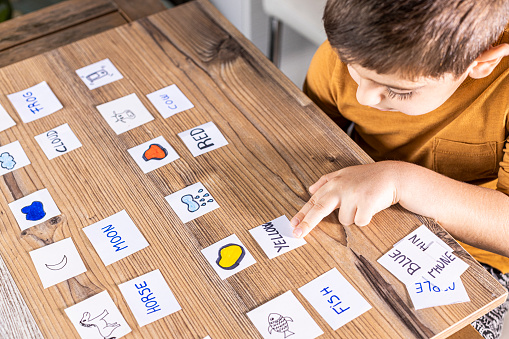
This isn't about translating or teaching long classes, but rather incorporating the language into daily life. For example, naming objects in the environment ("ball" when playing, "apple" when eating), singing children's songs in another language, or watching short cartoons in that language. Repetition and constant exposure strengthen memory and comprehension.

3. Routines with Language

Young children love routines. Take advantage of moments like greetings, snacks, bath time, or goodbyes to introduce simple phrases in the new language. This creates positive and functional associations with language use.

4. Don't Fear Mistakes

It's normal for children to mix words from both languages at first. It's not a mistake, but rather part of the natural acquisition process. The important thing is to continue exposing them to the language in a positive way, without negative or forced correction.

5. Family Involvement

The family plays a key role. They don't need to speak the second language perfectly; showing interest, singing together, repeating words, or reading illustrated stories is enough. This involvement creates an environment of trust and motivation.

This is an educational video on how we can teach our little ones a new language.

https://youtu.be/HecobysFp6U?si=s8fO1yj1yG982Lcw


Social Media as Your New Language Classroom

Social Media as Your New Language Classroom: Learn with YouTube, TikTok, and More What if your next language lesson was just one scroll away...